
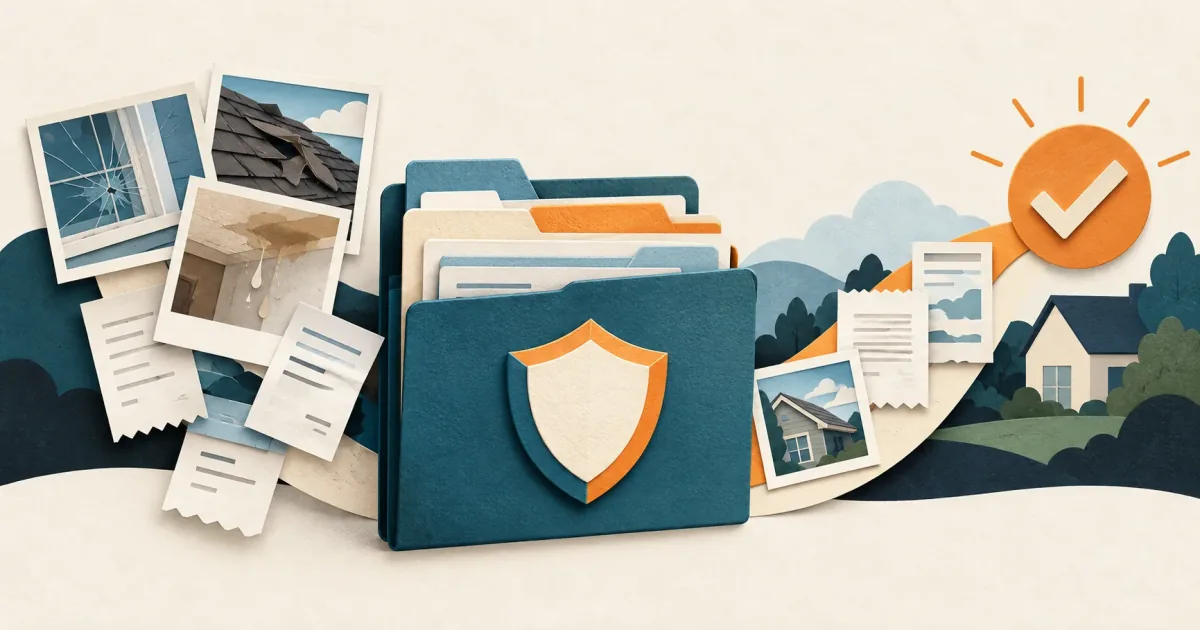
Water damage changes quickly. Early records can show the source and extent before drying, demolition and repair remove the evidence.
Put safety before documentation
Avoid electrical, structural, sewage and contamination hazards. Use qualified emergency help and follow official instructions. Take photos only from safe locations. Keep damaged property when feasible until the insurer explains inspection needs.
Create a loss timeline
- Last known dry condition.
- Discovery date and observed source.
- Shutoff or temporary repair.
- Insurer notification and inspection.
- Drying, testing and material removal.
Separate the water source from the damage
The failed pipe, appliance, roof opening, groundwater or flood event and the resulting damage may be treated differently by a policy. Ask the adjuster to identify the cause being evaluated and the controlling terms. Do not label the cause beyond the available evidence.
For drywall, flooring, cabinets or contents removed during mitigation, record room, material, dimensions or quantity, condition, photo reference, removal date and who authorized the work.
Reconcile competing scopes
Compare mitigation invoices, adjuster scope and contractor estimate line by line. Mark omitted areas, different measurements, material assumptions and code-related items. Submit a numbered supplement instead of a pile of new photos without explanation.
Document source, path and response separately
Record when water was discovered, the apparent source, areas reached, safety actions and mitigation performed. Photograph conditions before and during reasonable emergency work when safe. Keep plumber, restoration and inspection records without treating an early opinion as the final cause determination.
Map each damaged area and item to photos, moisture records, estimates and invoices. Compare the facts with the policy language and any exclusion or limitation cited by the insurer. Save removed materials where practical or ask how they should be documented. Version repair estimates so added scope can be traced to new findings.
Keep emergency work, permanent repair and testing costs in separate groups. This makes it easier to show what prevented further damage and what amount belongs to the final repair scope.
Document cause, path and response
Give each fact a dated source. Mark estimates clearly and keep originals separate from working copies.
Photos and video from source area through every affected room
Name the sourceDiscovery time, shutoff, emergency contacts and mitigation timeline
Add the date and versionMoisture readings, removed-material log, estimates and retained samples when safe
Link it to the fact it supportsUse the record in the next decision
Scope and sources
This guide provides a decision framework, not a prediction or individualized recommendation. Rules vary by contract and jurisdiction. Verify deadlines and remedies with the relevant official agency, regulator, policy and qualified professional.
Editorial review: Important claims are checked against the sources above under our published methodology.