
Pull the evidence
Keep the report version, bureau, account field and date instead of relying on a score summary.
Direct answer: First identify whether the problem is inaccurate reporting, high revolving balances, missed payments or identity theft. Each cause needs different evidence and a different next action.
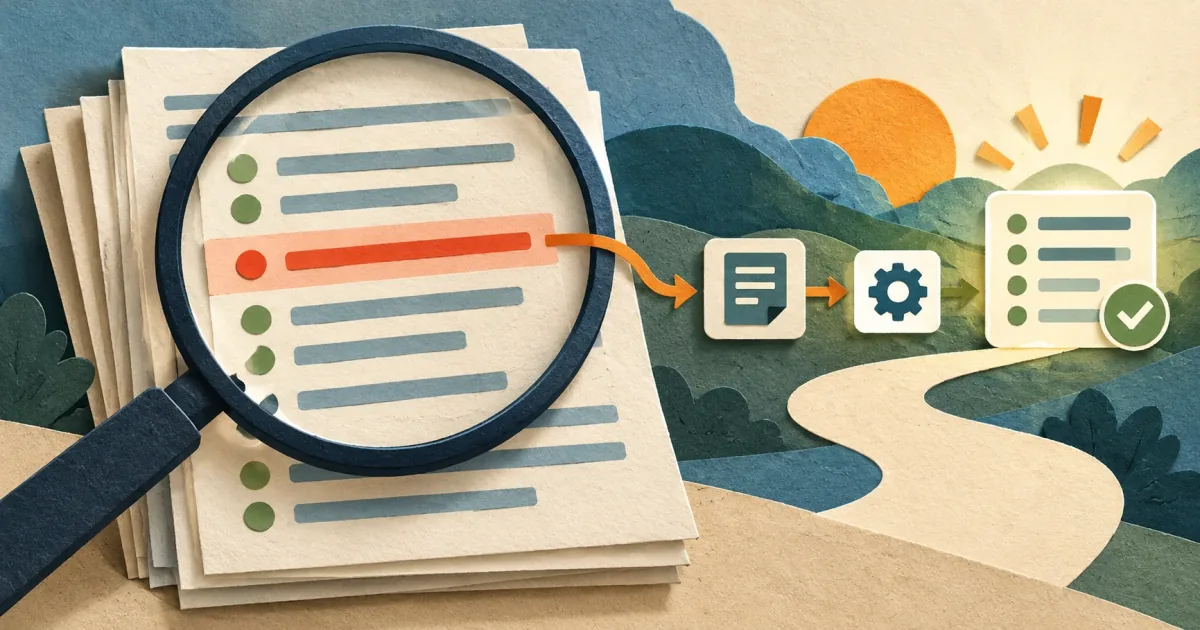
Separate reporting errors, utilization pressure, missed payments and identity theft.
Keep the report version, bureau, account field and date instead of relying on a score summary.
Separate an inaccurate fact from a correct balance that is hurting utilization.
Check the updated report itself after a dispute or balance change.
Verify this topic with official resources →
Read common credit questions →
Check whether a credit-report dispute file has the essential evidence →
If the reported balances are accurate but unaffordable, continue to the Debt problem center. →
Build a dispute that identifies the exact field, evidence and requested correction.
Read this guide →Model statement balances without confusing utilization with long-term debt payoff.
Read this guide →Use the lender's stated reasons and source report to choose the next action instead of applying again blindly.
Read this guide →Choose the protection that fits suspected identity theft, then track bureau access and recovery tasks.
Read this guide →Verify the reporting, stabilize every due date and improve the parts of the credit file you can control.
Read this guide →Review identity, account, inquiry and public-record sections in a fixed order so errors and risk signals are easier to spot.
Read this guide →Identify the company and application behind an unfamiliar credit inquiry before disputing it or starting identity-theft recovery.
Read this guide →Separate another person's accounts or identifiers from your credit file with a field-by-field evidence packet.
Read this guide →Decide whether two entries reflect a legitimate transfer or an inaccurate duplicate, then dispute only the conflicting fields.
Read this guide →Check whether a paid collection is reporting an incorrect balance or merely remains as accurate historical information.
Read this guide →Understand account access, payment responsibility and reporting before adding or removing an authorized user.
Read this guide →Compare deposit rules, fees, reporting and graduation terms before using a secured card to build credit history.
Read this guide →Add useful credit history carefully when you have few reported accounts, without paying unnecessary interest or stacking applications.
Read this guide →Check the issuer notice, reported balance and cash-flow impact after a card limit is reduced.
Read this guide →Compare fees, utilization, account age, fraud exposure and spending control before closing a card account.
Read this guide →Match freezes, alerts, report review and account security to the information exposed in a breach.
Read this guide →Audit reports, balances, cash and documentation before a home-loan application without chasing a promised score boost.
Read this guide →| Your situation | Best starting point |
|---|---|
| A report field is wrong | Build an evidence-led dispute |
| Balances are reporting high | Plan utilization before applying |
| The account may not be yours | Start an official identity-theft plan |